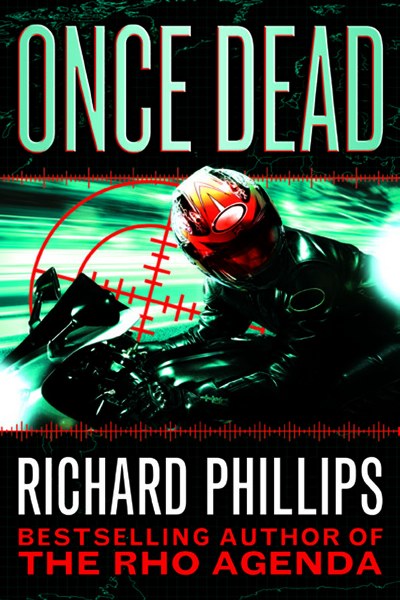
Jack Gregory, the CIA’s top assassin, bleeds out on a Calcutta operating table and is about to die.
But an alien entity has other plans for him.
If Jack is willing to act as a human host for this dark figure, he lives. Jack takes the deal. One year later, he is internationally known as The Ripper, fixer for hire, and finds himself increasingly drawn to dire, world-shattering events. Suffering strange premonitions and compulsions, Jack has more questions than answers. What destiny does this alien mind foresee? Why has it chosen him?
From bestselling author Richard Phillips comes a globe-spanning sci-fi thriller series with a twist … culminating in the cataclysmic events that set the stage for The Rho Agenda.
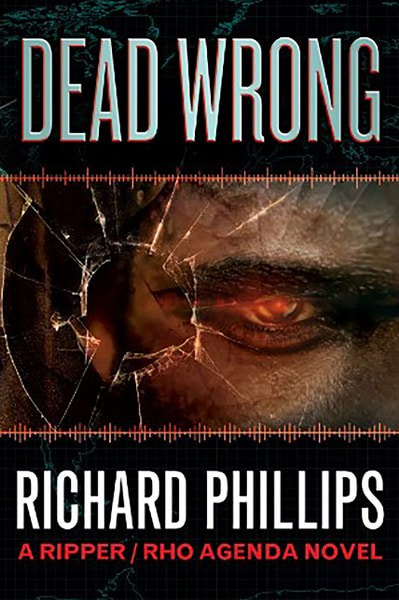
After the riveting events of Once Dead, Jack “Ripper” Gregory remains host to a homicidal alien bound to his soul. Now Jack has been hired for a suicide mission: journey to South America and rescue an imprisoned shaman. One problem…both the National Security Agency and a gang of neo-fascists are hot on his trail.
Neither group plans to let Jack live.
At stake is the immeasurably powerful Sun Staff, an ancient alien artifact that in the wrong hands will alter the course of human history. With the clock ticking, Jack must find and rescue the shaman before sinister forces get to him first. When Jack comes face-to-face with his equal—a stunningly beautiful NSA agent—he wonders if he can still pull the trigger and save his mission…even if the decision costs him his very soul.
From bestselling author Richard Phillips comes a globe-spanning sci-fi thriller series with a twist…culminating in the cataclysmic events that set the stage for the Rho Agenda.
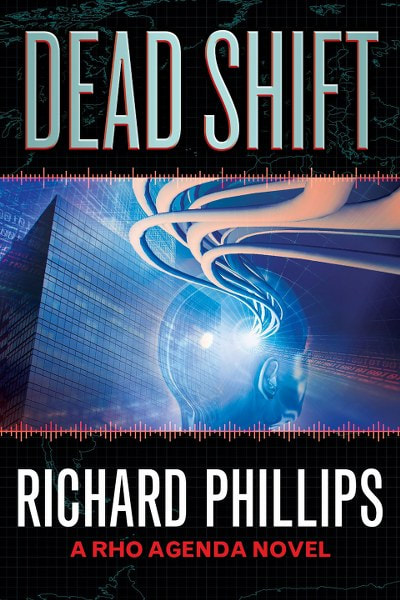
With the final chapter of the Rho Agenda Inception, all secrets will be revealed. Who is the alien mind haunting Jack “The Ripper” Gregory? What is the purpose of the immensely powerful Sun Staff? And how will the culmination of these events set the stage for the Rho Agenda?
In this page-turning sci-fi adventure, the NSA’s most brilliant hacker is abducted and the world stands on the brink of cyberwar. The Ripper and his ghost team commandos are called to action, battling a host of enemies ranging from a genius tech-billionaire and the Chinese government to an emerging superintelligence capable of bringing the world to its knees. With every threat in play, Jack must confront his alien passenger and regain some semblance of self-control. As the origins of the Rho Agenda come to light, Jack struggles to embrace his destiny. But how can even one such as he prevail against an existential threat to humanity?
Richard Phillips is the million copy bestselling author of the Rho Agenda Science fiction series and the epic fantasy series, The Endarian Prophecy. He has published fifteen novels and has just begun work on his next science fiction novel. Richard was born in Roswell, New Mexico and is a graduate of the United States Military Academy at West Point. After his graduation in 1979, he qualified as an army ranger and began his career as an officer. Richard also attended the Naval Post Graduate School where he earned a Master of Science degree in physics. He completed his master’s thesis at Los Alamos National Laboratory and served as a military research associate before retiring from the military in 1996. Richard went on to lead a number of software development projects at Lockheed Martin Space Operations and General Dynamics, before becoming a fulltime author. He lives in Phoenix with Carol, his lovely wife of thirty-nine years. They enjoy travelling the world together, playing golf, and hiking.
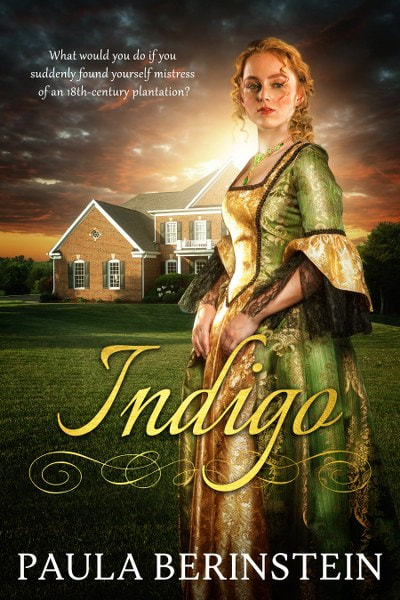
What would you do if you suddenly found yourself mistress of an 18th-century plantation?
Esther Rubens is looking forward to getting to know her new community in South Carolina and repairing her troubled marriage. But as soon as she arrives in Charleston her life begins to diverge from the idyllic picture in her mind. Her physicist husband, Melvin, is arrested for driving while black, she inherits a strange English property from a cousin she didn’t know existed, and she learns that her great-grandmother Sophie, a brilliant scientist kidnapped by the Nazis, discovered the secret of time travel of all things.
Intrigued by Sophie’s cryptic journal Melvin begins to experiment with time travel, but his anger at the police makes him careless. The process backfires, killing him and throwing Esther back to 1750. Attacked by an unknown assailant the moment she arrives, she seeks protection at an indigo plantation belonging to a dashing planter with a dangerous secret, negotiating a deal that guarantees her safety. But she soon realizes she’s made a terrible mistake. What she discovers on the plantation is far more horrific than anything she could have imagined.
Overwhelmed, she attempts to flee just as the planter’s mysterious, handsome brother arrives from England seeking refuge-and offering an opportunity that’s too compelling to turn down. But can he be trusted? And are the two of them strong enough to vanquish the evil that’s pervading the lowlands? Only time will tell.
Paula Berinstein (Paula B) is the author of the Amanda Lester, Detective middle-grade/YA series, which features a descendant of the Sherlock Holmes character Inspector Lestrade and is set in the English Lake District.
She is also the author of a new time travel series for adults, Indigo.
From 2005 to 2012, Paula produced and hosted the popular podcast The Writing Show (http://www.writingshow.com). She holds degrees in English literature and librarianship from UCLA.
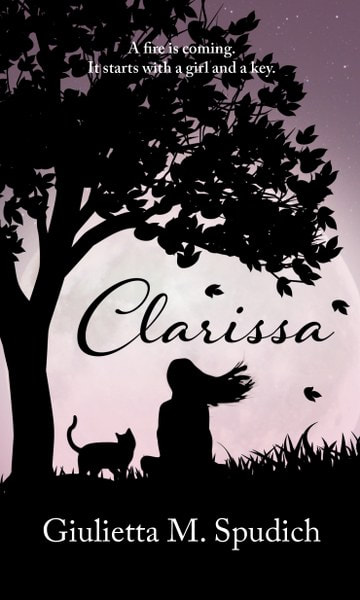
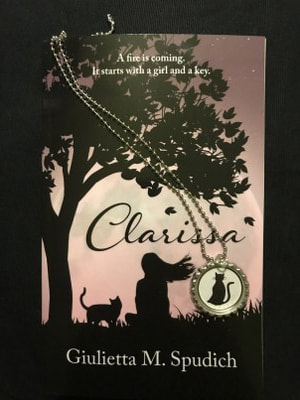
A fire is coming. It starts with a girl and a key.
After her mother’s death, Clarissa doesn’t know how to connect with her distant father. Her only friend is an oak tree who she can tell her deepest secrets. When she discovers a mysterious key that unleashes a long-forgotten fire spirit, she must find her voice to protect those she loves.
“A delightful, fantastical tale of how oak trees and humans can be friends.” -Dr. James Canton, author of “The Oak Papers”
Giulietta M. Spudich enjoys writing everything from children’s stories to grown-up fiction and poems in between. She lives in Cambridge, England where she moved from California in 2002. She is inspired by cats, especially her late black cat, Smokey.
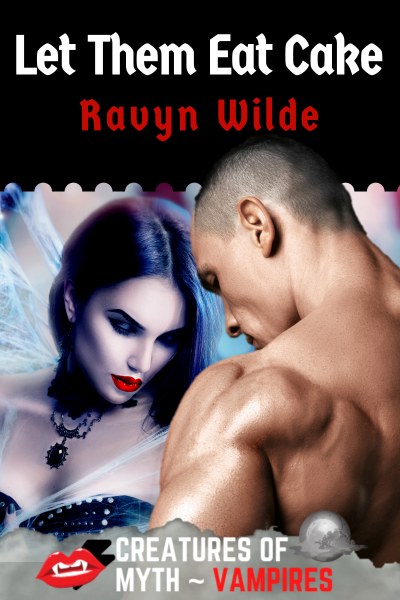
One night. One body. Vampire Marie Antoinette discovers a legendary monster she can’t kill–and a fated love she might die for… (Read in order or as standalone.)
When Vampire Sentinel Marie Antoinette slams into a new evil preying on both the human and supernatural creatures under her protection, she reaches out for help. What she finds is a scorching new love with Justin–an all-too-fragile human male. He might have muscles and attitude, but he is human!
Justin’s last military assignment took all the joy out of his life. His father has the perfect solution–introduce him to someone with that same faraway look in her eyes. Justin has been dropped into a world he didn’t realize existed and discovers an unwanted and deadly attraction to a MUCH older woman. His inexperience with this new reality is liable to get him killed, or worse!
Marie can’t resist Justin. But they don’t have any time to figure out if their attraction is more than just physical. They must hunt a thousand-year-old cannibalistic monster that can’t be killed, rescue a young girl from a pack of rogue werewolves, anddeal with Marie’s pompous ex-boyfriend. Will they live long enough to discover they are made for each other?
Let Them Eat Cake is the first book in Ravyn Wilde’s racy paranormal series, Creatures of Myth. This supernatural adult romance is filled with snarky humor and action-packed adventure. If you love sexy vampires, laugh out loud moments, and books bursting with mystery, suspense, and love–you’ll adore this!
Pick up Let Them Eat Cake today and come play with the Creatures of Myth!
Author note: This paranormal book contains lots of laughter, a few tears, steamy sex, and plots with a touch of terror. This includes rough handling and violence. The book deals with mature situations and has adult language. It is intended for those readers 18 and up.
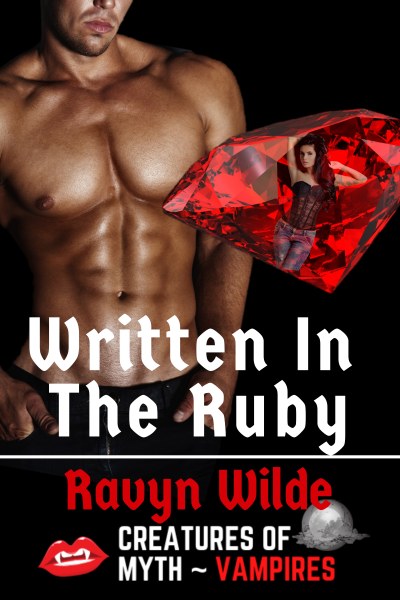
An ancient ruby with mystical powers. A deep and passionate connection between vampire and human. Madmen who will torture and kill for their secrets…(This standalone story is part of the Creatures of Myth series.)
Nicole Martin bought an adorable bungalow nestled on a vast estate. It provides the serenity and security she needs as an erotic romance author. Estate owner Zane Patrick is a gorgeous bonus, serving as sizzling inspiration for her novels. But when two shady government agents indicate he might be something other than human, Nicky’s overactive imagination kicks in. Perhaps it’s time to get to know the neighbor…
When Zane sold the house to Nicky, he created his own personal hell–every time she writes a sex scene, he witnesses every intimate detail in his mind. He shouldn’t get involved with his luscious neighbor, but cold showers can do only so much. When he learns of the agents’ accusations, he and Nicky explore their motives…and their lust for each other.
When Nicole is kidnapped by Human First fanatics, Zane would do anything to rescue the woman who might be his life mate. Including making a deal with Vlad Tepes. Will Zane rescue Nicky? Will they live long enough to discover the ruby has chosen them as fated mates?
Written In The Ruby is an insta-love, fated-mates, hard-earned happily-ever-after story. (They work hard for that happiness.) It is the the second book in Ravyn Wilde’s racy paranormal series, Creatures of Myth. This intense supernatural romance is filled with snarky humor and action-packed adventure. If you love sexy adult vampire stories, laugh aloud moments, and books bursting with action, suspense, and love–you’ll adore this!
Pick up Written in the Ruby today and come play with the Creatures of Myth!
Author note: This paranormal book contains lots of laughter, a few tears, steamy sex, and plots with a touch of terror. This includes rough handling and violence. The book deals with mature situations and has adult language. It is intended for those readers 18 and up.
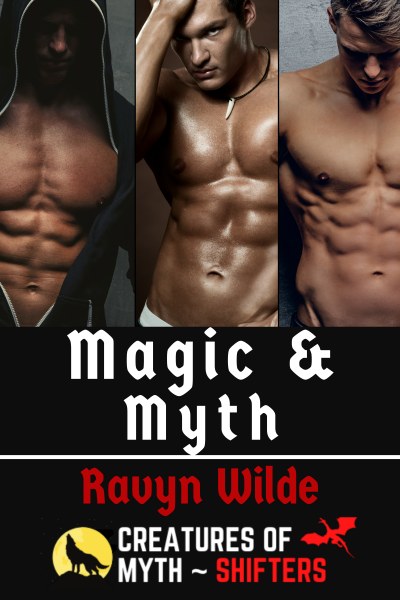
This Creatures of Myth Wilde Trio story collection includes: Undying Magic, Uncontrolled Magic, and Unholy Magic. The De’Angel family are Druid Mages. They are intensely powerful, magically erotic, and several centuries old. They keep the human world safe and the paranormal world hidden. (This standalone book is part of the Creatures of Myth series.)
Undying Magic In a race against time Jane and Ricardo search for mermaid scales, zombie toenails, Druid lust-sweat… You know–the usual potion ingredients to resurrect a Vampire!
Uncontrolled Magic What happens when a were-dragon propositions a very hungry vampire? He ends up naked and chained to a wall…among other things!
Unholy Magic Franco has loved Tehya since the moment they met. As a human woman, she could never survive in his world. Or could she?
Magic & Myth is an insta-love, fated-mates, hard-earned happily-ever-after book. (They work hard for their happiness.) It is the third book in Ravyn Wilde’s racy paranormal series, Creatures of Myth. This intense adult romance is filled with snarky humor, supernatural suspense, and action-packed adventure. If you love sexy dragons, werewolves and vampires, along with a little spine-tingling terror and laugh out loud moments–you’ll adore this!
Pick up Magic & Myth today and come play with the Creatures of Myth!
Author note: This paranormal book contains lots of laughter, a few tears, steamy sex, and plots with a touch of terror. This includes rough handling and violence. The book deals with mature situations and has adult language. It is intended for those readers 18 and up.
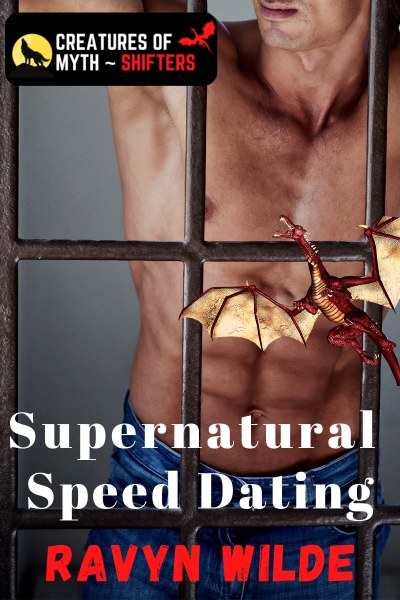
How do you save the world and explore the fragile–well–passionate beginnings of a new romance at the same time?(This standalone story is part of the Creatures of Myth series.)
Natasha spends every minute of her life upholding the GOTH motto, “Hurt can be fixed, there isn’t anything we can do about dead.” As Captain of the Guardians of True Humanity, there is always another paranormal bad-ass to hunt down. But Natasha’s mother and witchy-best friend think she needs a social life, so they’re forcing her to attend the Supernatural Speed Dating event. She doesn’t have time for this crap.
Dominic made a deal with the devil, or more accurately with one of his grandson’s. Now he is stuck in the hell of speed dating. His attitude changed the minute Natasha raised her head and met his gaze with laughing blue eyes.
Natasha and Dominic aren’t looking for a relationship, until the sparks fly and make them both wonder, what if? Then Natasha gets kidnapped, Dominic gets thrown in the dungeon, and the horror of missing and dead paranormal children consumes every minute of Natasha’s time. Can they save the world and each other?
Supernatural Speed Dating is an insta-love, fated-mates, hard-earned happily-ever-after story. (They work hard for that happiness.) It is the fourth book in Ravyn Wilde’s paranormal series, Creatures of Myth. This supernatural romance is filled with snarky humor and action-packed adventure. If you love sexy dragons, magic spells, kick-ass heroines, and nail-biting suspense–you’ll love this!
Pick up Supernatural Speed Dating today and come play with the Creatures of Myth!
Author note: This paranormal book contains lots of laughter, a few tears, steamy sex, and plots with a touch of terror. This includes rough handling and violence. The book deals with mature situations and has adult language. It is intended for those readers 18 and up.
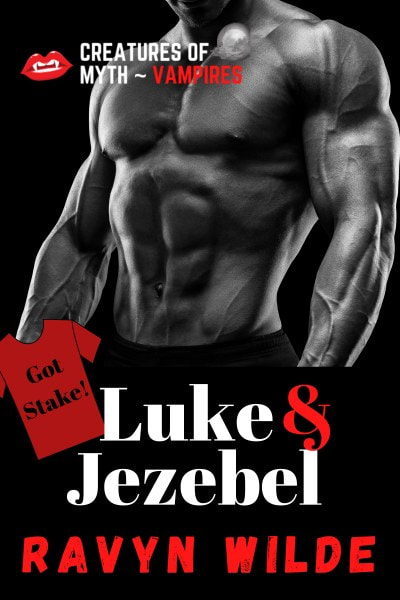
When the sparks fly between Luke & Jezebel in the middle of a Human vs. Other race war, they are both singed by the outcome. Will they discover they are fated mates before it’s too late?
(This standalone story is part of the Creatures of Myth series.)
In the year 2203, the tenuous truce between humans and Others straddles the line between hate rhetoric from the fanatical One Racers, and acceptance by more liberal humans. Angry cracks appear in this diplomatic accord when human children are kidnapped from their beds, and the Fae are blamed for their disappearance. Hired as the public relations expert for the Others, Jezi Longtree is excited to help the paranormal community restore its image among humans.
Her eagerness turns into intense aggravation when she meets her contact, Luke Skylord. As Sentinel for the region, the man is infuriating, arrogant–and sexy as hell.
Luke appreciates Jezebel’s creative talents immediately–as well as her luscious body.
Determined to make the voluptuous redhead his temporary bed-mate, his pursuit of the intriguing woman is relentless. When he finds himself on an unprecedented emotional roller coaster, Luke discovers there’s more to Jezebel than Double Ds.
Their passion may kill them if the One Racers don’t do it first!
Luke & Jezebel is an insta-love, fated-mates, hard-earned happily-ever-after story. (They work hard for that happiness.) It is the fifth book in Ravyn Wilde’s racy paranormal series, Creatures of Myth. This hot as Hades supernatural romance is filled with snarky humor and action-packed adventure. If you love sexy vampires, mythical Fae warriors, kick-ass heroines, hilarious family drama, and nail-biting suspense–you’ll love this!
Pick up Luke & Jezebel today and come play with the Creatures of Myth!
Author note: This paranormal book contains lots of laughter, a few tears, steamy sex, and plots with a touch of terror. This includes rough handling and violence. The book deals with mature situations and has adult language. It is intended for those readers 18 and up.
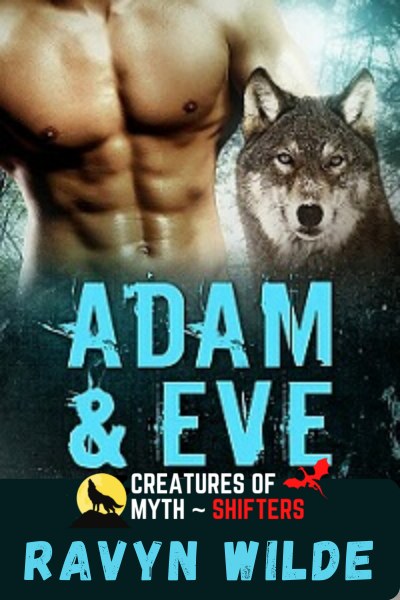
There’s a wolf at the door! To prevent being scented and claimed by a werewolf, Eve has never forgotten to lock herself into her safe-room when the moon is full. Until now. (While this story can be read as a standalone – it is better when paired with book 5 in the series so you can discover what happens to Eve’s sister.)
Werewolves have one genetic breeding mate. During Lupine Moon they can scent and claim her. Eve refuses to allow an alpha male to dictate her life.
Adam has searched for his mate for years. As pack leader, his most important responsibility is managing volatile human/were relations. But his human mate has just been catapulted to the top of the One Racer’s Hit List.
This fanatic human purist group will stop at nothing to destroy Eve’s work and take her life. Can Adam convince Eve that being his mate is not a fate worse than death? More importantly–can he keep her alive?
Adam & Eve is an insta-love, fated-mates, hard-earned happily-ever-after story. (They work hard for that happiness.) It is the sixth book in Ravyn Wilde’s racy paranormal series, Creatures of Myth. This supernatural adult romance is filled with snarky humor intrigue. If you love sexy werewolves, laugh out loud moments, and books bursting with mystery and love–you’ll adore this!
Pick up Adam & Eve and fall in love with something Wilde!
Author note: This paranormal book contains lots of laughter, a few tears, steamy sex, and plots with a touch of terror. This includes rough handling and violence. The book deals with mature situations and has adult language. It is intended for those readers 18 and up.
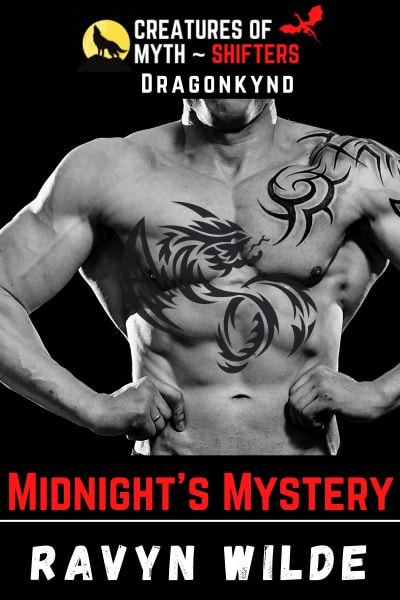
When a Dragon Lord kidnaps her fledglings, Midnight kicks his ass and gets the girls back. But then the Lord surprises her, overwhelms her with the help of a mysterious dragon-male, and hides her from her coven. (Can be read as a standalone or an alternate starting point for the series.)
Matei wants Midnight to become his ideal women. All she needs to do is wear more clothes, stop saving humans, and quit using her magic. She is going to kill him. She has no interest in staying home and playing house!
Midnight is overwhelmed fighting eco-terrorists and three fledgling Dragon Witches who want to stretch their wings. Realizing dragonkynd is almost extinct–she is now forced to search for a male of her species. But she doesn’t want one for herself, another member of her coven can breed the next generation.
Matei wants a submissive mate, just like his mother. But when his brother is kidnapped, he
discovers he needs the warrior in Midnight to save his brothers. These Dragon Witches don’t behave anything like what he was taught to believe a true female of their species should act.
Will Matei give up his dream of finding a submissive mate, and realize the depth of his feelings for Midnight? Can Midnight teach the overbearing, out-of-touch Lord how to survive in the real world? Even more important, will anyone live through the evil plot to annihilate the dragonkynd race?
Midnight’s Mystery is an insta-love, fated-mates, hard-earned happily-ever-after story. (They work hard for that happiness.) It is the seventh book in Ravyn Wilde’s paranormal series, Creatures of Myth. This ménage romance is filled with snarky humor and action-packed adventure. If you love sexy dragons, magic spells, kick-ass heroines, and nail-biting suspense–you’ll love this!
Buy Midnight’s Mystery today and come play with the Creatures of Myth!
Author note: This paranormal book contains lots of laughter, a few tears, steamy sex, and plots with a touch of terror. This includes rough handling and violence. The book deals with mature situations and has adult language. It is intended for those readers 18 and up.
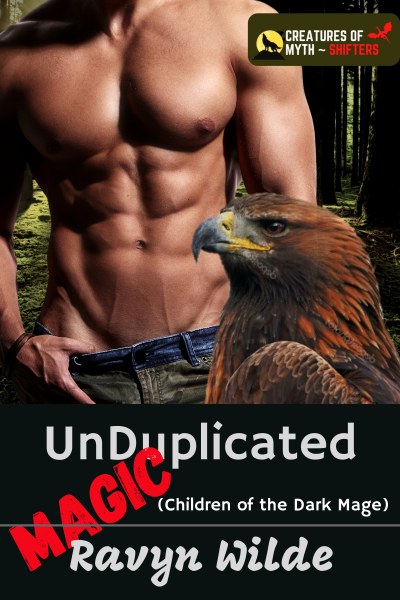
A Dark Mage intent on world domination. A binding love spell. Can Jason and Gypsy break their magically hot connection and save the world? (Can be read as a standalone – or part of the series.)
Jason Dark Eagle is a Native American Shaman. For centuries he has protected the innocent from the malicious world-altering attentions of a demon. Until an old friend demands he honor an old debt. When Gypsy walked into the Devil’s Boardroom, she took his breath away. The stunning woman looked like heaven and tempted him to forget all the reasons women like her weren’t a good idea. They were sweet, kind, human.
Gypsy Royal is a Romani Traveller, an undercover operator, and weapons expert trained to take care of herself. Some would call her a witch.But when her sister Rose disappears, she needs the help of an elite tracker. An old family friend sends her to Jason. Just looking at Jason was pure pleasure. And when he spoke, chills of desire danced down her spine. The man was trouble. But he was supposed to be the best man for the job. She needed his skills, in more ways than one.
Neither expected the immediate and magically enhanced attraction they had to each other. Can they break the magic spell? Do they want to? Both need to be able to think clearly when they discover there is more at stake than Gypsy’s sister.
The entire world is at risk from the evil plotting of a demonic Dark Mage. Can they survive long enough to unravel the mystery?
UnDuplicated Magic, Children of the Dark Mage is an insta-love, fated-mates, hard-earned happily-ever-after story. (They work hard for that happiness.) It is the eighth book in Ravyn Wilde’s racy paranormal series, Creatures of Myth. This intense adult romance is filled with supernatural suspense, alternate history, and action-packed adventure. If you love sexy shamans, gorgeous gypsy’s, and a host of dragons, and vampires–not to mention a little spine-tingling terror and laugh out loud moments–you’ll adore this!
Pick up UnDuplicated Magic today and come play with the Creatures of Myth!
Author note: This paranormal book contains lots of laughter, a few tears, steamy sex, and plots with a touch of terror. This includes rough handling and violence. The book deals with mature situations and has adult language. It is intended for those readers 18 and up.
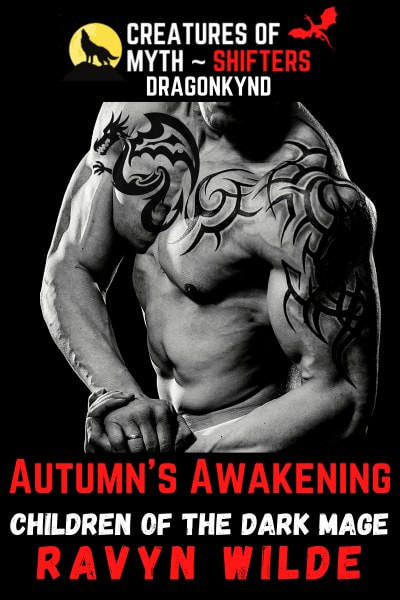
Autumn’s Awakening – Dragonkynd: Children of the Dark Mage
Creatures of Myth Book 9
Save the Children. Rescue the Clones. Kill the demon. In order to do those things Autumn needs to wake up the cranky, old-fashioned Dragon Lord, figure out who the HECK the dragon-male is… and get them to help. This Dragon Witch is going to rock their world!(This story can be read as a standalone or as part of the series.)
Let sleeping dragons lie – wasn’t an option for Autumn. She had to wake a hibernating Dragon Lord to save the humans. The entire world is at risk from the evil plotting of a demonic Dark Mage.
Nicholae woke to a different world. One where everything he’d been taught – and punished for – wasn’t true. Now if he could convince the Dragon Witch who woke him that she was his mate, he might live long enough to help her.
Autumn’s Awakening – Dragonkynd is an insta-love, fated-mates, hard-earned happily-ever-after story. (They work hard for that happiness.) It is the ninth book in Ravyn Wilde’s paranormal series, Creatures of Myth. This supernatural adult romance is filled with snarky humor and action-packed adventure. If you love sexy dragons, magic spells, kick-ass heroines, and nail-biting suspense–you’ll love this!
Buy Autumn’s Awakening today and come play with the Creatures of Myth!
Author note: This paranormal book contains lots of laughter, a few tears, steamy sex, and plots with a touch of terror. This includes rough handling and violence. The book deals with mature situations and has adult language. It is intended for those readers 18 and up.
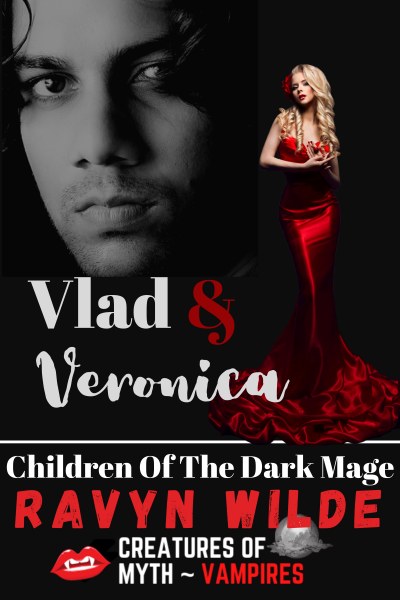
Is their love enough to save the world from the insane plot of a megalomaniac demon?
Veronica has been kidnapped – again. It’s up to Vlad to find her, save her, and then they can focus on finding the demon and destroying him before his clone army takes over the world.
While this story can be read as a standalone – it is better when paired with books 7, 8, and 9 in the series to follow the secondary plot – Children of the Dark Mage.
Vlad & Veronica, Children of the Dark Mage is an insta-love, fated-mates, hard-earned happily-ever-after story. (They work hard for that happiness.) It is the tenth book in Ravyn Wilde’s paranormal series, Creatures of Myth. This supernatural adult romance is filled with snarky humor and action-packed adventure. If you love sexy vampires, magic spells, kick-ass heroines, a dragon or two, and nail-biting suspense–you’ll love this!
Author note: This paranormal book contains lots of laughter, a few tears, steamy sex, and plots with a touch of terror. This includes rough handling and violence. The book deals with mature situations and has adult language. It is intended for those readers 18 and up.
Ravyn Wilde is the author of the Zylar’s Moons, Creatures of Myth, and Out of THIS World series. She writes Hot romance filled with things that go bump in the night! Get Wilde with a werewolf, or vampire, maybe a dragon or two…or let an Alien hunk take you away from all your troubles. But keep track, because one and a while a story-worthy human comes along. These books have strong, capable women and happily-ever-after endings. Ravyn is a firm believer in escapism, preferring to read and write stories that have little basis in the real world.
Ravyn is passionate about her family, the beach, and the hammock in her backyard where she stares up at the treetops and formulates her books. Oh, and coffee…she’s very passionate about coffee. She has lived all over the western United States and in a few exotic places like New Guinea and Singapore. She is married with three grown children and a fabulously fun, expanding hoard of grandchildren.
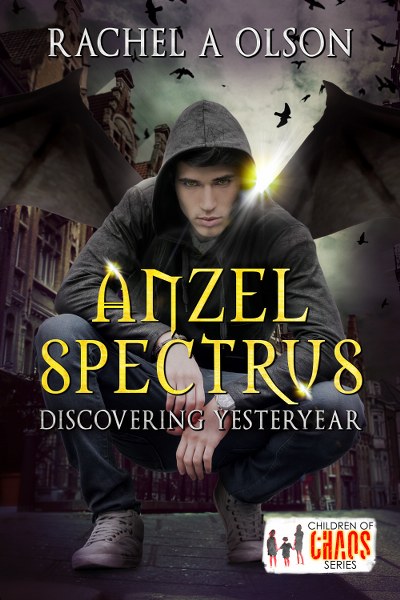
Anzel Spectrus has been alone as long as he can remember. So long so that he has convinced himself he prefers it that way. At least until he discovers what it’s like to have others in his life.
Mongo the minotaur usually spends his time trying to bully Anzel, until one day he asks for Anzel’s help out of desperation. Mongo’s request leads to Anzel meeting Brucie, who tells him that his aura is the color of a powerful being that seemingly no longer exists outside of a children’s bedtime story that Anzel has never heard. The three set out together in search of answers in an attempt to either prove or debunk the details of that bedtime story, and to hopefully find an answer to who Anzel really is.
The question remains, who – or what – is Anzel Spectrus?
Rachel A Olson resides in rural Northwestern Nebraska, along with her husband, three children, two cats, and a yellow lab. She is a bit of a workaholic with a full-time day job, working as a freelance graphic designer and formatter in her spare time, as well as squeezing in her writing. Rachel is also passionate about her faith and stays involved in her church as much as she can. She enjoys the quiet outdoors, loves to travel, and often craves spicy foods. She considers herself to be a helper by nature and wants nothing more than to see other artists succeed in the areas they are most passionate about.
Fall Into Fantasy 2020 brings you thirteen tales from authors new and familiar. Our authors explore many subgenres of fantasy and ask questions like, “What if someone out there is writing your life story?”, “Can you change your reality through dreams?”, “If someone is so securely locked away, is there a reason?”, and “If you could do over a decision in your life, would you?”
They bring you wizards, a magic hat, vampires, and fantastical creatures to tickle your imagination. They explore social media challenges and the powers of a child’s imagination.
Come along with us on these journeys. You may just find a new favorite author to follow.
Fall Into Fantasy 2019 brings you 13 tales from faces familiar and fresh to our family. As you read these pages we hope you, like us: will laugh, cry, and hopefully keep down your lunch. We bring you stories of vampires and faeries, wolf men and spirit children. You’ll find supernatural sirens and super intelligent felines. Magical people and even a magical goat that will certainly make you laugh. Be careful with your social media and hopefully you’ll still be able to stomach pepperoni after you read these tales. Warlocks and witches, including an interesting take on Lilith. Meanwhile, our favorite Sandhog tangles with Homeland Security and a Minotaur. Join us for a romp through these fantastic tales of fantasy. We’re sure you’ll find something you like.
Stories In This Edition:
“What’s In A Name?” by Linda M. Crate “The Maiden’s Sacrifice” by Matthew McKiernan “The Demon In The Mask” by James Pyles “Runa and the Dark Forest” by J.C. Pillard “Unfollowed” by Sandy Stuckless “The Demonologist of Kraith” by Mike Adamson “Possession is 9/10ths of the Pepperoni” by Molly Neely “Lesser Men” by Clint Foster “Wyrwood” by Jillian Wahlquist “The Hanged Man’s Hand” by Alex Minns “The Weeper of Kirka” by Tannara Young “The Fig Merchant’s Daughter” by Brenda Anderson “The Minotaur” by Tony Conaway
Fall Into Fantasy returns with thirteen new stories to delight your imagination. You’ll see some familiar names and some brand new authors in this edition. Check inside for some great stories from:Jaap Boekestein, Bill Davidson, Anna O’Brien, Andrew Sweetapple, Carrie Gessner, Mark Easterday, S. A. McKenzie, Dwain Campbell, Jennifer Lee Rossman, Owen Morgan, David O’Hanlon, Tony Conaway, and Austin Worley.These authors have worked hard to bring you exciting new adventures in magic, the supernatural, and mythical creatures. We hope you’ll laugh, cry, and maybe think a little bit just like we did when we read these tales.
Fall Into Fantasy contains thirteen unique takes on the Fantasy genre from authors of all walks of life, from prolific authors, to newcomers. With everything from dwarves and magic, to zombies and a bookstore that can transport you to other worlds, there is something for everyone in these pages.
Stories In This Edition:
“Boffin the Listener” by David Pauly
“Today’s Gift, Tomorrow’s Curse” by Andrew Sweetapple
“Kitchen Magic” by Susan Bass Marcus
“Care of Laborers’ Local Union No. 147” by Tony Conaway
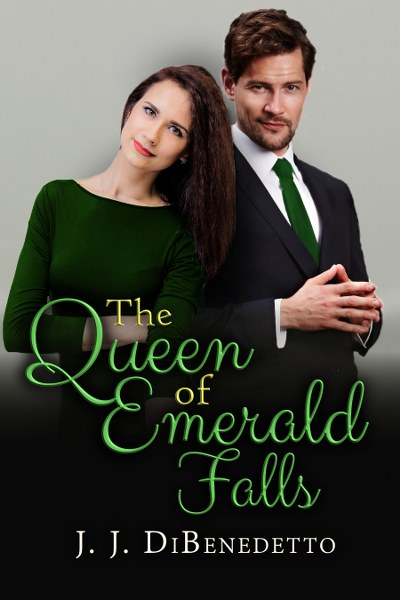
She’s spontaneous, passionate and has a habit of mangling the English language.
He’s calm and controlled and always has the perfect thing to say in every situation.
If their differing personalities were the only obstacle, they’d probably have smooth sailing. Unfortunately, things aren’t that simple in the town of Emerald Falls, and life keeps throwing curveballs at Sheryl Jones and Dr. Jon Hardy.
If they’re going to find true love, they’ll have to deal with Sheryl’s archenemy trying to destroy her business, and Jon’s interfering brother showing up to try and ruin his life. And then there’s the vindictive daughter of the richest man in town, not to mention a stolen vintage Rolls Royce.
Can this star-crossed couple fight their way past all the obstacles and make their way back to each other without losing their jobs, their sanity or going bankrupt in the meantime?
Romantic comedy fans will love this quirky mix of “How I Met Your Mother” and a daytime soap opera.
J.J. (James) DiBenedetto was born in Yonkers, New York. He attended Case Western Reserve university, where as his classmates can attest, he was a complete nerd. Very little has changed since then.
He currently lives in Arlington, Virginia with his beautiful wife and their cat (who has thoroughly trained them both). When he’s not writing, James works in the direct marketing field, enjoys the opera, photography and the New York Giants, among other interests.
J.J. is the author of the Dream Doctor Mysteries, the Jane Barnaby Adventures and several other works.
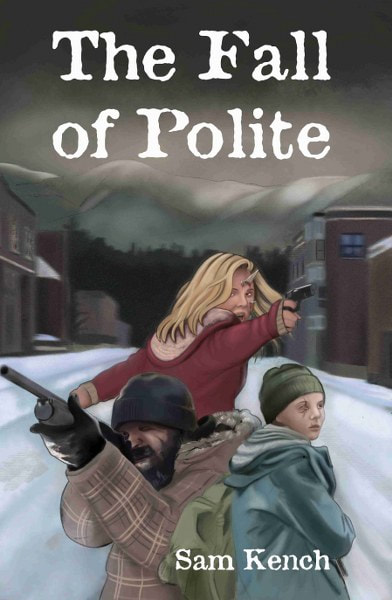
In a freshly lawless New England in the dead of winter…
A bloodied and barefoot 17-year-old, grieving the loss of her father, trudges around a smoldering pileup on the road out of town. She’s endeavoring the 120 mile trek to her only living family member through blizzard conditions…
A once kind-hearted lumberjack splits a teenager’s nose in half with the rim of a metal gas can. Since the day his family was slaughtered before his eyes, he’s been consumed with an undying fury that can only be quelled through acts of violence…
A two-time college-dropout, trying to do good, howls in agony as her face is slashed with a razor-blade. The crackhead who did the deed is taking back her five-year-old child who the drop-out was trying to protect after finding him abandoned in a dumpster…
Anyone wishing to live must harden and adapt to the new rules of a world post-fall of polite. This dangerous new world will make you into a survivor… or a corpse.
Sam Kench is a 23-year-old writer and independent filmmaker. His screenplays and short films have been awarded by festivals and competitions around the world. Click here to check out work on BrickwallPictures.com
In 2014 he was named one of the top defenders of free speech by the National Coalition Against Censorship.
He grew up in New England and spent years exploring many of the locations that found their way into the novel. He now resides in Los Angeles. ‘The Fall of Polite’ is his debut novel.
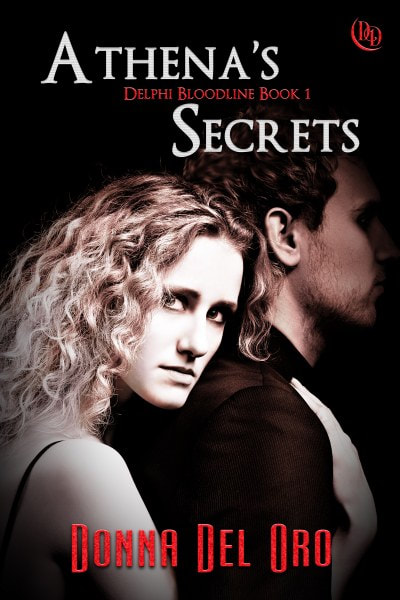
Athena Butler, the twenty-year-old descendant of an ancient bloodline of psychics, yearns to live a normal life. She wants a career in art, a boyfriend, independence. Her clairvoyance has taught her, however, that people can be false and dangerous. Although warned to keep her psychic gifts a secret, she’s recruited by law enforcement to help search for a serial killer and to uncover a terrorist cell that threatens her own diplomat father.
She bonds with an intriguing, handsome man, Kas Skoros, who knows her secret and accepts it. Of the same bloodline, his own mother is precognitive and predicts they are meant to be together…someday. Kas realizes that life is too uncertain, but he can’t resist his growing passion for the strange young woman.
Still, they face obstacles beyond their control. Can Athena and Kas overcome these obstacles? More importantly, can Athena stay alive long enough to fulfill her dream of a normal life?
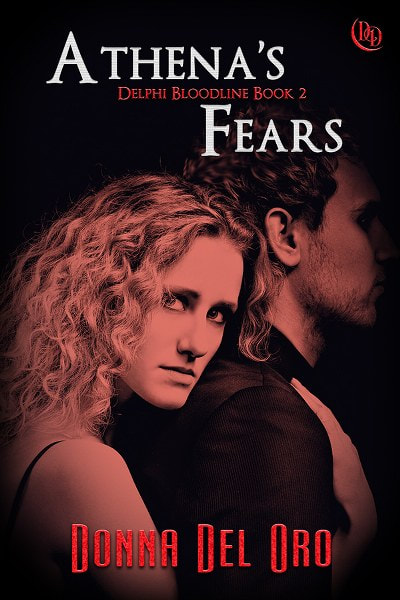
Kas Skoros, his marriage to Alex’s former fiancée now annulled and no longer intimidated by Athena’s psychic gifts, begs her to move to San Francisco and manage an art gallery that his family’s company owns. However, burned once, Athena holds him at arm’s length.
Athena is enticed to consult in another serial killer case. As time passes and secrets are leaked, others—including the killer’s brother—find out that Athena is the one who’s helping the police. Meanwhile, a strange young woman on a motorcycle appears to be stalking her. Warning bells go off as Athena realizes the woman is not who she seems to be.
After Detective Ochoa’s cousin, Detective Inspector Villalobos, persuades Athena to help him with this baffling case, she realizes a truth that horrifies her and threatens both her and Kas. While at a crowded Christmas festival in the Sierra foothill town of Grass Valley, they encounter a man who attempts to kidnap Kas’s nephew. It was Athena’s lapse of attention which nearly causes this tragedy and threatens to destroy her relationship with Kas. Only their seeking of justice can right this wrong, and they risk their lives to do so.
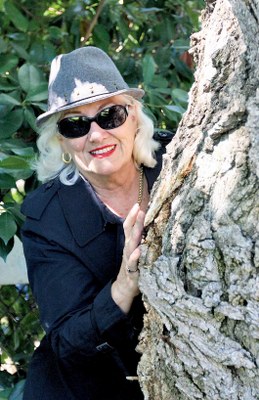
Donna Del Oro’s dream since childhood (when she used to create her own comic books and share them with her friends) has been to write fiction. Escaping the humdrum of ordinary life always seemed to her an ideal form of self-entertainment. Better than TV and even better than some books! As soon as she retired from high school teaching (which was a suspenseful adventure in itself), Donna turned to fiction writing. Becoming a member of the RWA and Sisters in Crime has helped her to learn the craft and focus on what she needed to do to get published.
Besides writing Chica Lit, she writes romantic suspense and thrillers. THE DELPHI BLOODLINE is a hybrid thriller about the present-day descendants of an ancient bloodline of women with extraordinary psychic powers and how they must fight against enslavement by a ruthless high-tech tycoon.
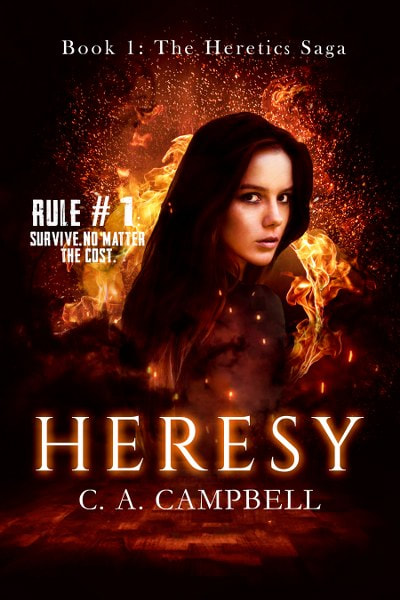
To survive, citizens must live, dress, and even love according to the United Council’s will. Their power is absolute—until a rebel bomb ignites at a national ceremony and unites the lives of three unlikely people.
When the bombing goes wrong, Nicolette Howell, a young heretic, finds herself alone and on the run, bearing secrets that Arcadia would kill for. When she’s captured, she must escape, but how can she, when her best chance lies with the son of her sworn enemy?
Driven by the execution of an innocent, Jacob Osgood, a United Councilor’s son, hunts for the truth about the heretic movement that Arcadia has hidden. But truth could cost him the one thing he cannot stand to lose: the girl who saved his life at the bombing.
Shiloh Haven, the orphaned daughter of heretics, is forced to become Arcadia’s spy in a sinister plot to destroy the heretic army. She faces a terrible choice: survive or risk everything to save the boy she might just love and the rebels who are her only chance of being free.
As their fates entwine, the three must answer an impossible question.
C. A. Campbell hails from Kansas City (The Missouri side, if you please), where she shares her writing space with her husband and three ridiculous dogs. She splits her time between writing, saving tiny lives, and teaching students how not to kill people as a neonatal intensive care nurse and nurse educator. When she’s not working, she can be found (likely, in her pajamas) making things out of yarn, listening to a true crime podcast, or yelling at medical errors in television shows. Heresy is her debut novel.





































 The FlipSide of Julianne